
Last Updated on September 9, 2026 by Sugarbook Team
Sugar dating stopped being a fringe curiosity a while ago. In 2025 it became something closer to a structured relationship economy, one with its own demographics, spending patterns, and geography. This report breaks down what actually happened on Sugarbook this year, using real platform data from millions of active members.
TL;DR
- 🌍 6.3M combined members across 143 countries, 107M+ messages exchanged in 2025
- 🎓 Student Sugar Babies are the largest segment at 38%, and most allowance spending goes to rent, education, and debt
- 💬 40% of Sugar Daddies now rank emotional connection above everything else, including looks
- 🏙️ New York still leads, but Kuala Lumpur, Taipei, and Singapore are closing the gap fast
- 💰 Reported allowances range from a $3,200 platform-wide average up to a $6,500 global monthly figure, with a recorded high of $150,000
Contents
- A Market That’s Outgrown the “Niche” Label
- Sugarbook Live and the Rise of the Creator Economy
- Who’s Actually Showing Up as a Sugar Daddy in 2025
- The Rise of the Student Sugar Baby
- The Sugar Economy: Where the Allowance Actually Goes
- Where the World Is Sugar Dating
- What Members Actually Want in 2025
- The Generational Split
- The Bigger Picture
- Looking Ahead: What 2026 Looks Like
- FAQ
A Market That’s Outgrown the “Niche” Label
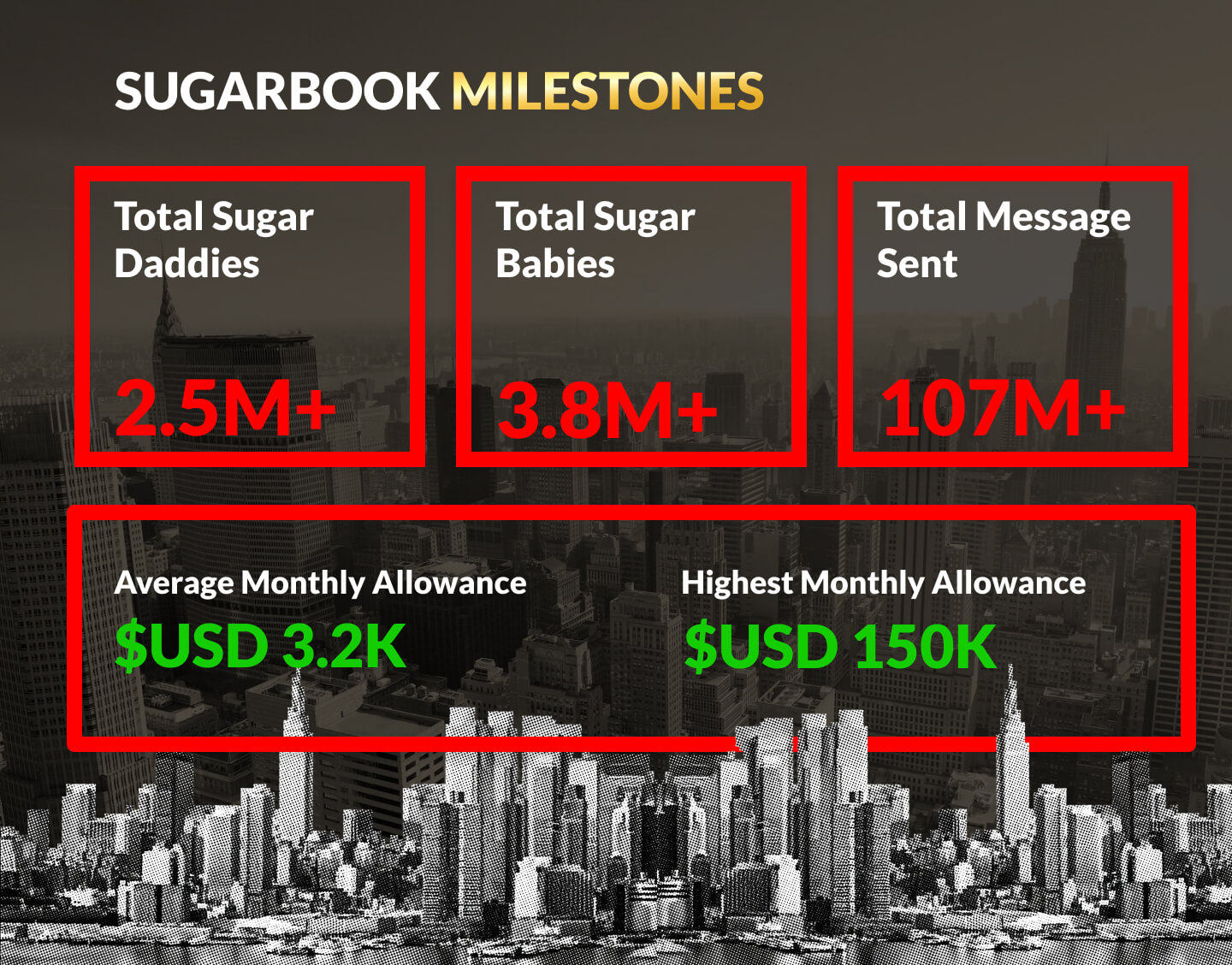
The scale alone makes the point. Sugarbook closed 2025 with over 2.5 million Sugar Daddies and 3.8 million Sugar Babies worldwide, and the two groups didn’t just sign up and disappear. They exchanged more than 107 million messages over the course of the year, which is the kind of engagement number that only happens when people are actually using a platform, not just parked on it.
The financial range is wide by design. The reported average monthly allowance sits around $3,200 USD, while the highest reported monthly allowance on record hit $150,000 USD, a reminder of how much headroom exists at the top end of premium arrangements.
6.3M
Combined members
143
Countries
107M+
Messages in 2025
$150K
Top reported allowance
Put together, this is a platform defined less by secrecy and more by structure, transparency, and consistent activity.
No Swiping | Free to Join
Sign Up Free →
Sugarbook Live and the Rise of the Creator Economy
Live streaming turned out to be more than a feature add-on. It created a genuine hybrid between social dating and content monetization, and creators noticed. Livestreamers earned over $1.2 million USD in payouts through 2025, led by Nissy at 40 million diamonds earned, YanYan at 23 million, and Bombshell at 16 million.
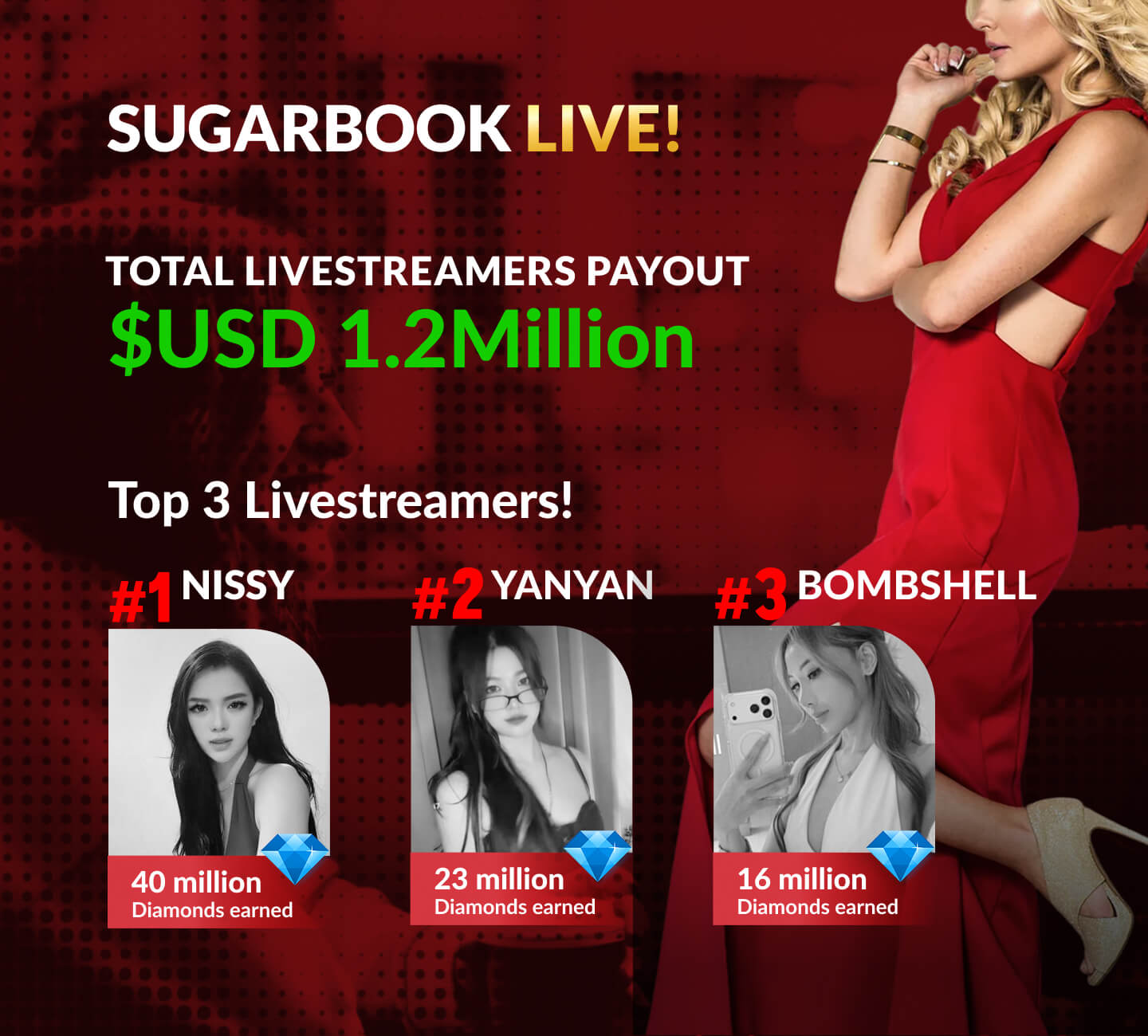
That kind of payout activity says something about where the platform is headed: sugar dating and creator monetization aren’t staying in separate lanes.
Who’s Actually Showing Up as a Sugar Daddy in 2025
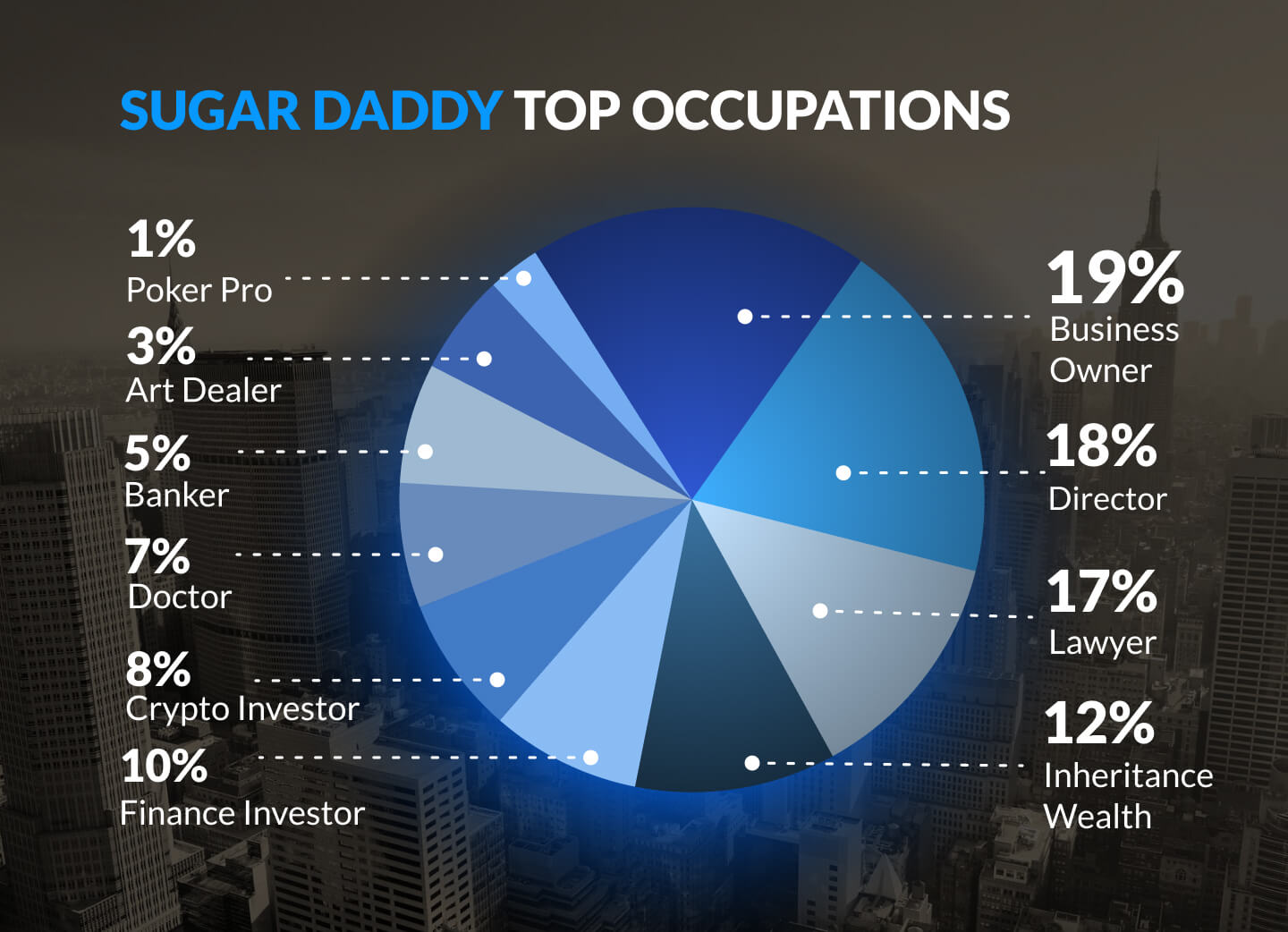
The stereotype of the elderly, married sponsor doesn’t hold up against this year’s numbers. Today’s Sugar Daddies are more often independent professionals whose wealth is self-made, and who are turning to sugar dating for clarity and compatibility they weren’t finding on traditional apps.
Where the Wealth Comes From
Relationship Status
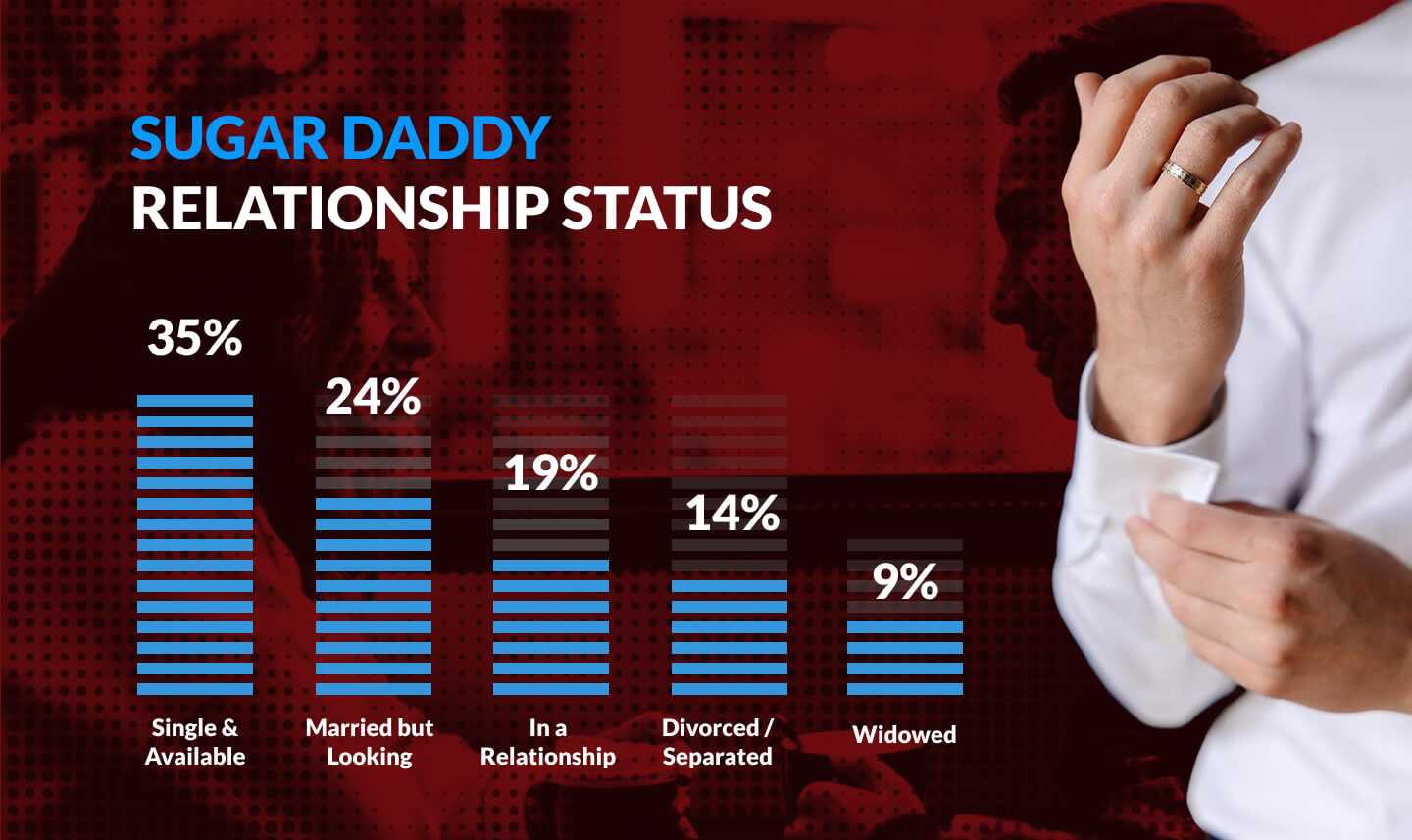
The bigger shift is in who’s single. In 2025, Sugar Daddies are predominantly unattached: 35% single and available, the largest single segment, followed by 24% married but looking, 19% in a relationship, 14% divorced or separated, and 9% widowed. That’s a clear move toward independence and intentional dating rather than secrecy.
The Rise of the Student Sugar Baby
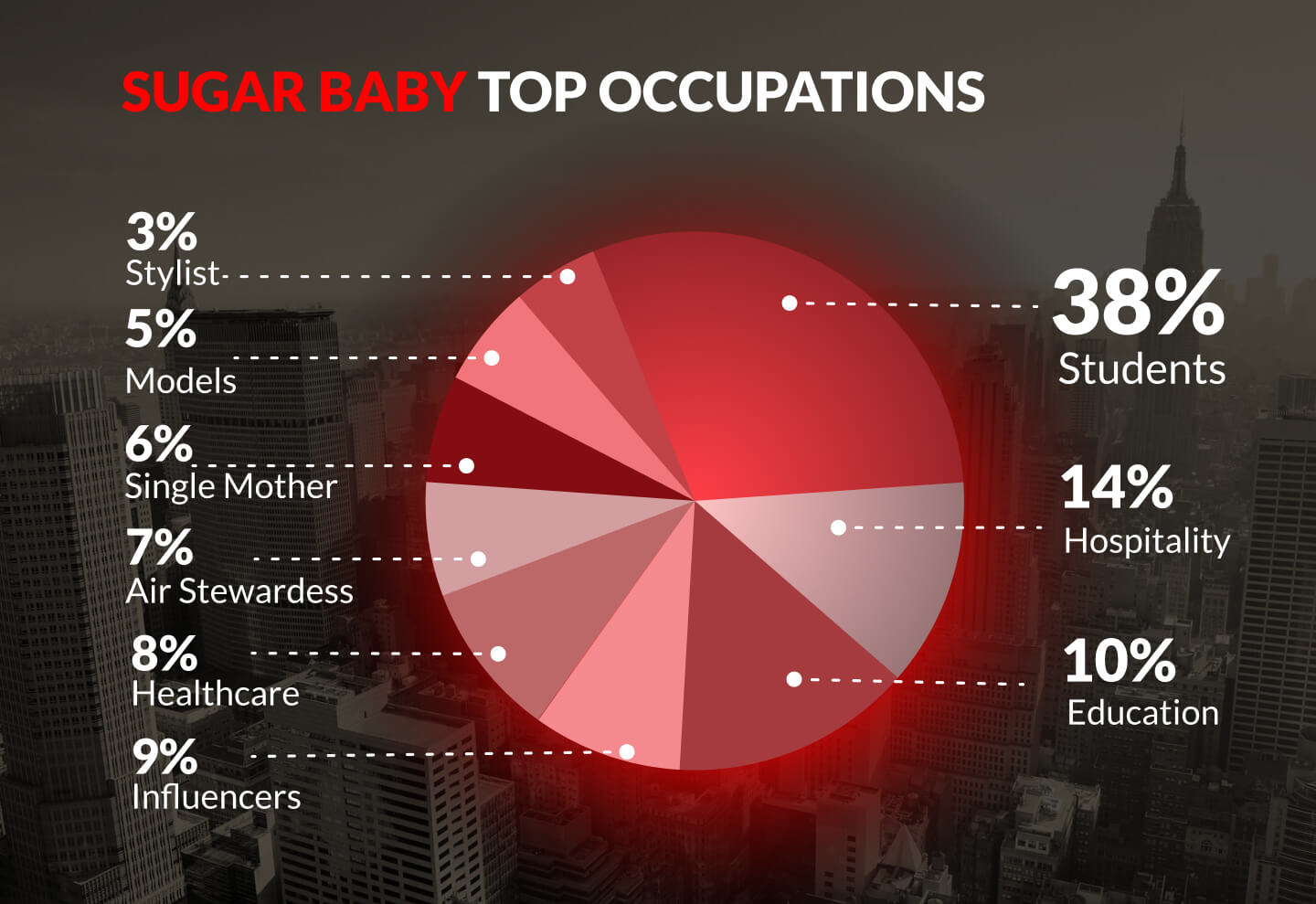
The Sugar Baby demographic stayed young and educated in 2025, and one group pulled ahead of everyone else: students, at 38% of the platform, using it to graduate debt-free. Behind them, hospitality professionals made up 14%, education 10%, influencers 9%, healthcare 8%, air stewardesses 7%, single mothers 6%, models 5%, and stylists 3%.
The Sugar Economy: Where the Allowance Actually Goes
This is where the “luxury lifestyle” myth falls apart. Platform-wide, the reported average monthly allowance is $3,200 USD, while the global monthly average across active arrangements runs higher at $6,500 USD, with the top percentile of Ultra-High Net Worth arrangements peaking at $150,000 USD per month. The real story isn’t the ceiling though, it’s the floor: this money is functioning as essential income, not spending money.
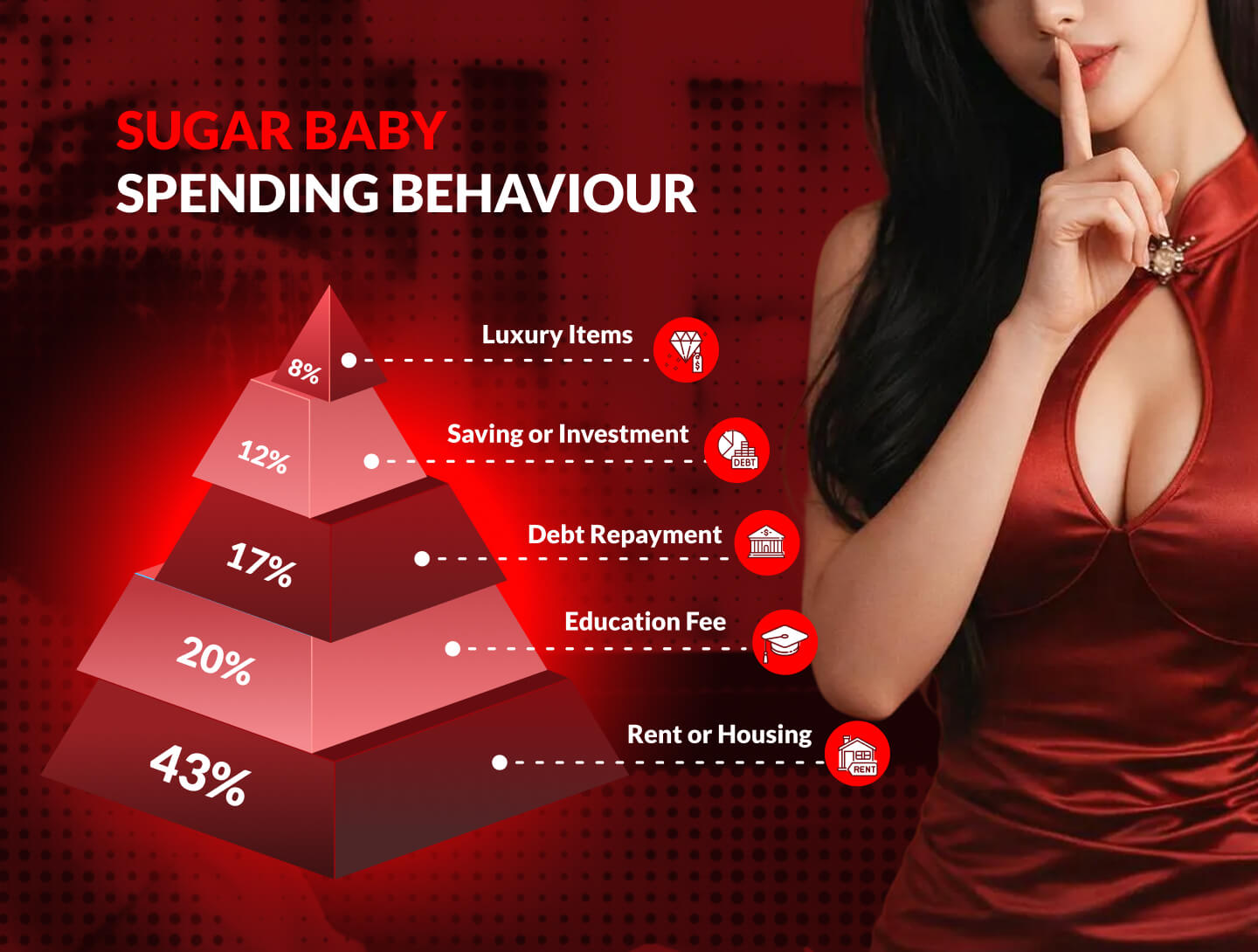
80% of every allowance dollar goes to rent, education, and debt. Six percent goes to luxury. That’s not a shopping fund, that’s a safety net.
Where the World Is Sugar Dating
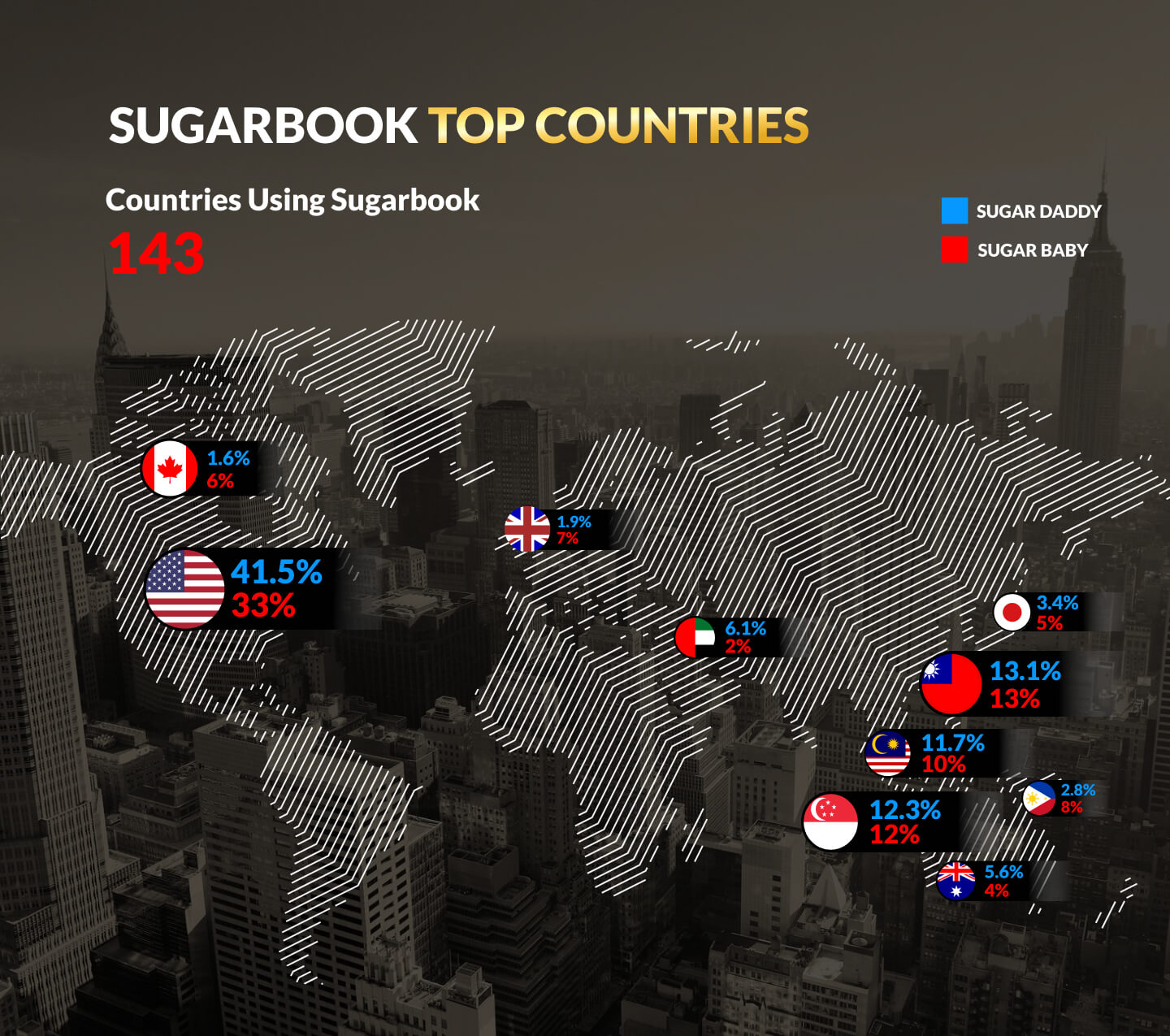
The United States still holds the largest overall share, but the fastest growth in 2025 came out of Asia-Pacific. Sugarbook now operates across 143 countries, and the country-level breakdown shows the US leading for both Sugar Daddies (41.5%) and Sugar Babies (33%), with Taiwan, Singapore, and Malaysia forming a strong second tier on both sides.
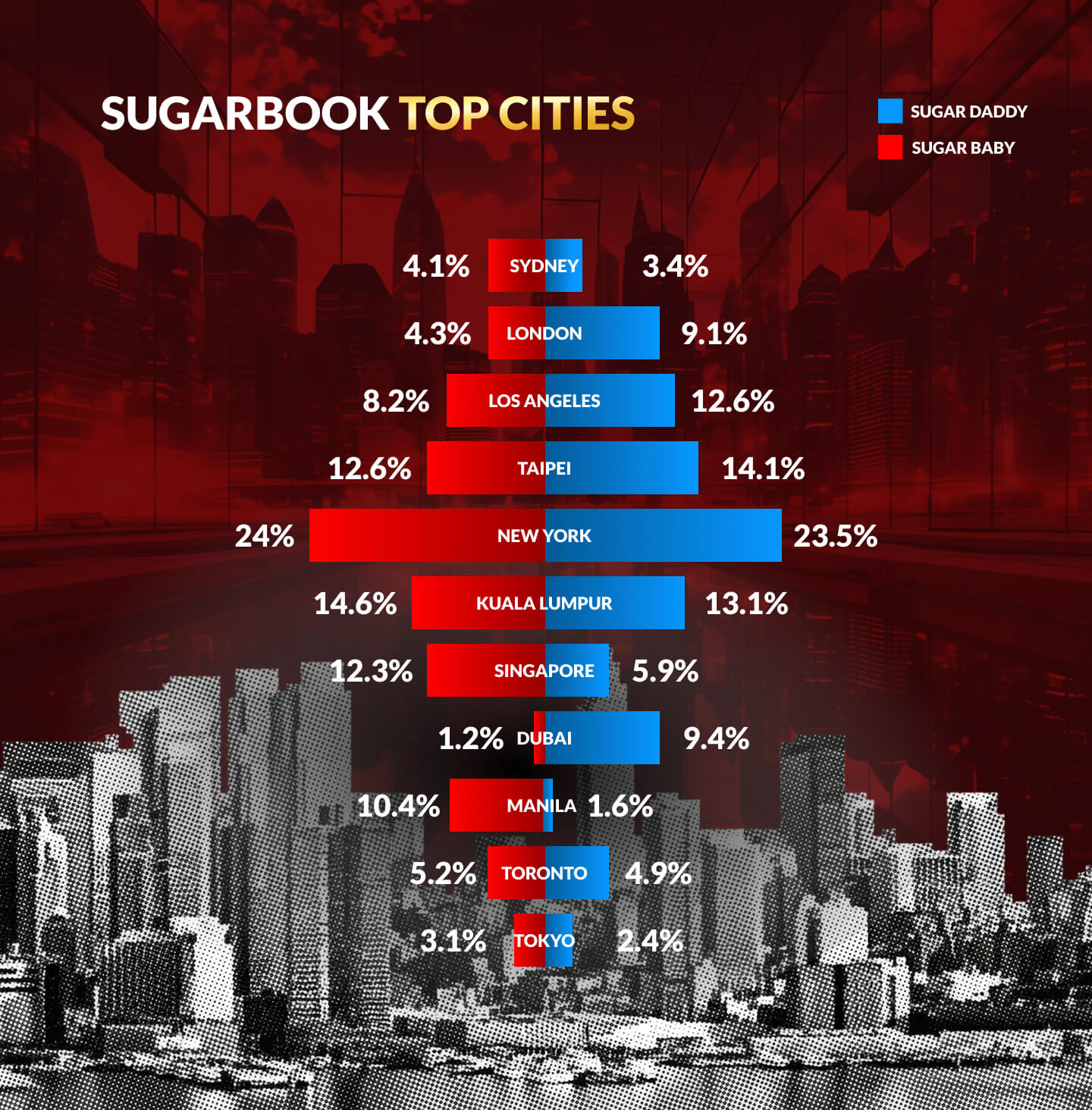
The 2025 Sugar City Index
New York remains the undisputed capital of sugar dating for both groups. But the real story of 2025 is the power shift toward Asia: Kuala Lumpur, Taipei, and Singapore have climbed into the top tier, rivaling and in some cases outpacing traditional Western hubs like London and Los Angeles.
Top Cities · Sugar Daddies
- New York – 23.5%
- Taipei – 14.1%
- Kuala Lumpur – 13.1%
- Los Angeles – 12.6%
- Dubai – 9.4%
- London – 9.1%
- Singapore – 5.9%
- Toronto – 4.9%
- Sydney – 3.4%
- Tokyo – 2.4%
Top Cities · Sugar Babies
- New York – 24%
- Kuala Lumpur – 14.6%
- Taipei – 12.6%
- Singapore – 12.3%
- Manila – 10.4%
- Los Angeles – 8.2%
- Toronto – 5.2%
- London – 4.3%
- Sydney – 4.1%
- Tokyo – 3.1%
What Members Actually Want in 2025
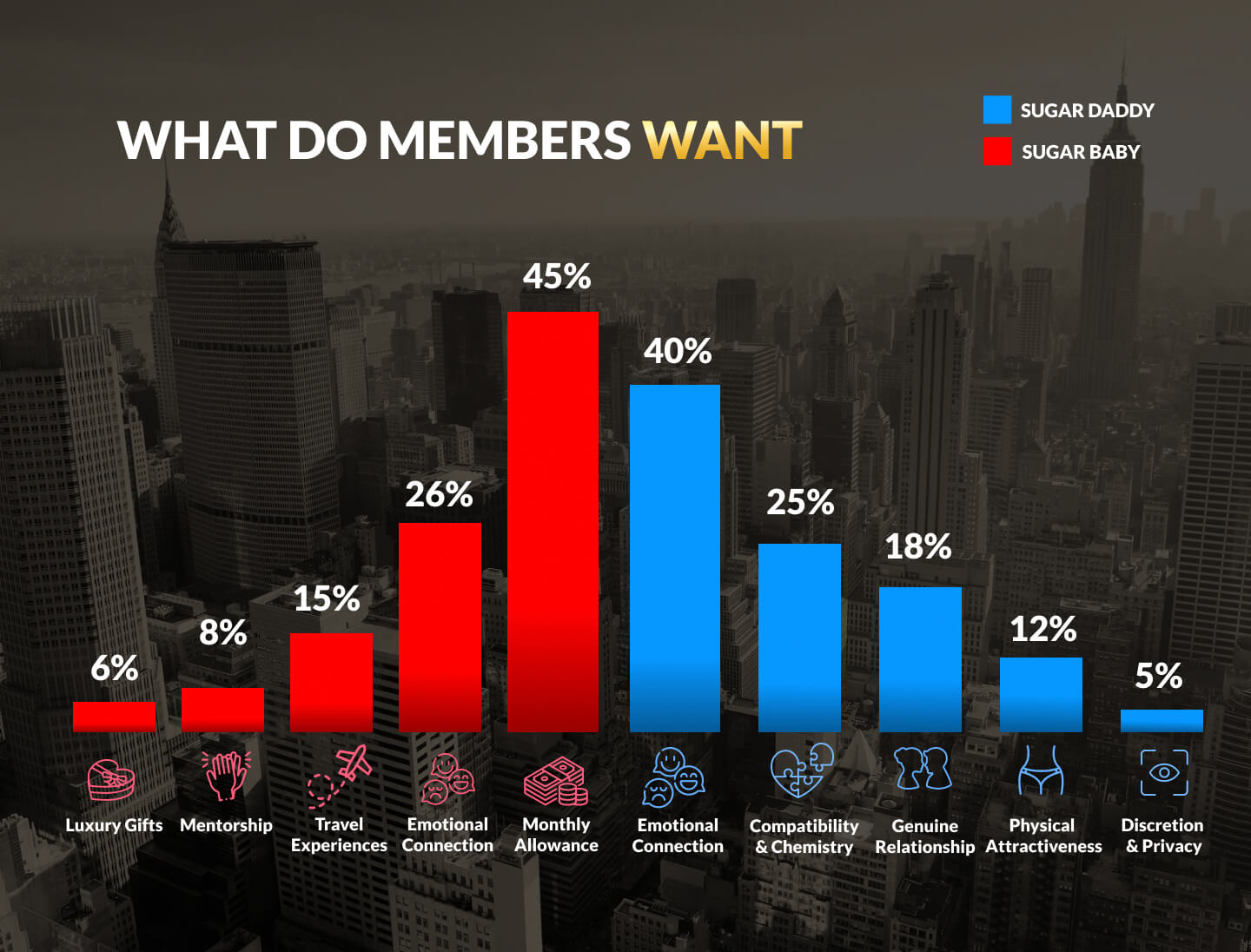
This is arguably the most telling shift in the whole report. Secrecy and surface-level attraction have been overtaken by emotional clarity on both sides of the platform.
What Sugar Daddies Want
40% Emotional Connection
25% Compatibility & Chemistry
18% Genuine Relationship
12% Physical Attractiveness
5% Discretion & Privacy
What Sugar Babies Want
45% Monthly Allowance
26% Emotional Support
15% Travel Experiences
8% Mentorship
6% Luxury Gifts
Today’s Sugar Daddies are defined less by secrecy and more by independence, self-made success, and intentional relationship-building. On the other side, Sugar Babies are showing a clear preference for structured support paired with mentorship and real companionship, not just gifts.
The Generational Split
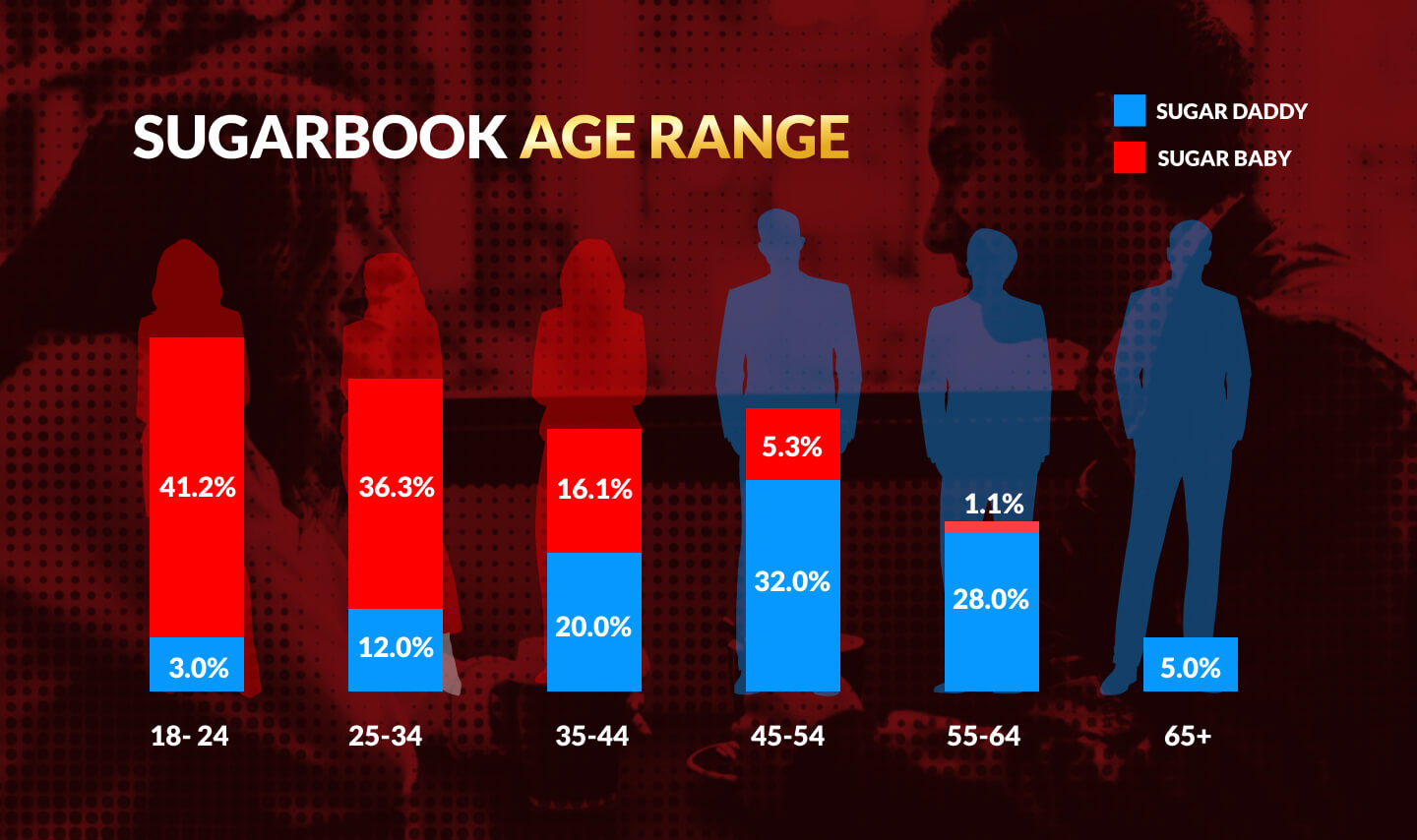
The age data lays out a clean generational structure: Sugar Babies skew young, Sugar Daddies cluster in their peak earning years. Laid side by side, the pairing makes sense on its own, ambition and rising living costs on one end, financial stability and emotional maturity on the other.
Most Sugar Babies fall between 18 and 34. Most Sugar Daddies fall between 45 and 64. The overlap sits right where both sides say they want it: established, but not out of touch.
The Bigger Picture
Line up the numbers and a clear story emerges. Student Sugar Babies now make up 38% of the platform, and 80% of allowance spending goes straight to housing, education, and debt, not indulgence. That makes Sugarbook less a luxury add-on and more a financial tool for navigating a genuinely expensive decade.
The relationship side is maturing in parallel. With emotional support and mentorship ranking alongside financial help, the line between “dating” and “sugar” keeps getting thinner. Transparent, expectation-first relationships are becoming the normal way to date, not the exception.
Looking Ahead: What 2026 Looks Like
If 2025 was the year sugar dating went mainstream, 2026 looks like the year it goes flexible. The growth curve isn’t slowing down. Student Sugar Babies keep entering the platform every intake season, Asia-Pacific cities keep climbing the rankings, and the shift toward emotional clarity over secrecy shows no sign of reversing.
The bigger change to watch is how members are choosing to arrange things. Traditional, in-person sugar dating isn’t going anywhere, but a growing number of Sugar Babies are also exploring online-only arrangements, allowances and companionship managed entirely through calls, messaging, and livestreaming without ever meeting in person. It’s a natural extension of everything the 2025 data already points to: more structure, more upfront honesty, and more flexibility in how people define an arrangement. For a full breakdown of how that model works and which platforms actually support it, see our guide to sugar daddy apps that send money without meeting.
Put simply: the market is still growing, the reasons people are joining are getting more practical, and the ways they’re choosing to connect are getting more varied. That’s a promising setup heading into next year.
Real Members. Real Data. Real Arrangements.
Free to Join · 6.3M Members Worldwide · 143 Countries
Verified profiles, transparent expectations, and a platform built for arrangements that actually work.
See Income & Net Worth
143 Countries
FAQ
How large is Sugarbook’s market footprint in 2025?
Sugarbook operates in 143 countries with 6.3 million combined members, and exchanged more than 107 million messages in 2025 alone.
What’s the average allowance on Sugarbook?
The platform-wide reported average is $3,200 USD a month. Looking at the global average across active arrangements, that figure runs higher at $6,500 USD, with top-tier arrangements reaching as much as $150,000 USD monthly.
What are Sugar Babies mainly using their allowance for?
Mostly rent or housing (43%), followed by education fees (20%) and debt repayment (17%). Only 6% goes toward luxury items.
What do Sugar Daddies prioritize in 2025?
40% prioritize emotional connection, 25% compatibility and chemistry, and 18% a genuine relationship, ahead of physical attractiveness or discretion.
Which cities and regions stand out in the 2025 data?
New York leads both rankings. Kuala Lumpur, Taipei, and Singapore show the strongest momentum, closing in on established Western hubs.
Is online-only sugar dating growing?
Yes. Alongside traditional in-person arrangements, more Sugar Babies are exploring fully online arrangements heading into 2026. See our guide to online-only sugar relationships for how that model works.