Last Updated on August 6, 2026 by Daryl Emily

Meet successful sugar daddies and confident sugar babies on a trusted sugar dating app for adults in the United States. Join free today.
Successful professionals often approach online dating with privacy concerns that go beyond ordinary profile security.
A company founder may need to protect employees and clients. A physician may not want patients discovering a personal dating profile. An attorney, senior executive, investor, public figure or finance professional may need to avoid exposing workplace information, travel patterns or family details before trust has been established.
These concerns do not mean professionals need to hide who they are. They mean personal information should be shared carefully, deliberately and at the right stage of a connection.
In modern sugar dating, privacy is less about creating a secret identity and more about controlling when, where and with whom identifying information is revealed. The strongest approach combines a low-exposure profile, separate communication channels, careful verification and gradual disclosure.
Contents
- Privacy Essentials at a Glance
- The Most Practical Way to Stay Discreet
- Why Successful Professionals Face Greater Privacy Risks
- Privacy Is Controlled Disclosure, Not Dishonesty
- Build a Credible Profile That Is Difficult to Trace
- Should You Use Your Real Job Title on a Sugar Dating Profile?
- Separate Sugar Dating From Your Professional Identity
- Review Every Photo for Identifying Clues
- Limit Unnecessary Location Exposure
- Keep Early Conversations Inside the Platform
- Verify Someone Without Oversharing
- Do Not Treat Wealth Claims as Proof of Identity
- Financial Requests Are Not a Normal Verification Step
- Be Careful When Connecting on Social Media
- Create a Gradual Disclosure Plan
- Set Privacy Boundaries Before Moving Off-Platform
- Protect Photos, Messages and Personal Data
- Watch for Attempts to Create Urgency
- What to Do When Profile Details Do Not Match
- What to Do If Your Identity Has Already Been Exposed
- Professional Privacy Checklist Before Publishing Your Profile
- Discretion Should Support Better Decisions
- Key Takeaways
- FAQ
Privacy Essentials at a Glance
Successful professionals can protect their identity in sugar dating by limiting identifiable profile details, avoiding employer names, using separate contact information and reviewing photos for workplace or location clues.
Early conversations should remain inside the platform where possible. Verification can provide an additional trust signal, but neither person should be pressured to share a driver’s license, banking record, employment document or other sensitive information.
A privacy-conscious approach does not prevent an authentic connection. It gives both adults enough time to evaluate consistency, expectations and boundaries before exchanging more personal details.
The Most Practical Way to Stay Discreet
The safest approach is to reveal personal information in stages.
Begin with enough truthful information to create a credible profile, but not enough for a stranger to immediately identify your full name, employer, home address or daily routine. Use the platform’s verification and communication tools, observe whether the person remains consistent over time and move to private contact only when both people feel comfortable.
This reflects the principle of data minimization: sharing only the information that is genuinely necessary for the situation. The fewer unnecessary personal details exposed early, the lower the risk of misuse, unwanted contact or professional embarrassment.
Why Successful Professionals Face Greater Privacy Risks
Everyone using online dating should protect personal information. However, successful or publicly visible professionals may face additional exposure because more information about them is already available online.
A profile photo may match an image on a company biography. A precise job title may identify one person within an entire city. A photograph taken inside an office may reveal a company logo, employee badge or recognizable skyline. Even a casual comment about an upcoming conference can disclose a travel schedule.
The risk is rarely created by one detail alone. It develops when several small pieces of information are combined.
These may include:
- A first name
- An exact profession
- A specialized job title
- An employer’s industry
- A neighborhood or suburb
- A university or professional association
- A frequently visited city
- A recognizable profile photograph
Individually, these details may seem harmless. Together, they can make a profile surprisingly easy to identify.
Professionals should therefore think about their overall information footprint, not simply whether one individual detail appears private.
Privacy Is Controlled Disclosure, Not Dishonesty
Protecting your identity does not require inventing a false career, false age, false relationship status or fictional personal history.
A privacy-conscious profile can remain truthful while using broader descriptions.
Instead of writing:
Senior Vice President of Operations at a named healthcare company in Boston.
A safer early description may be:
Healthcare executive based in the Northeast.
Instead of writing:
Founder of a cybersecurity startup with offices in Austin and San Francisco.
A more discreet version may be:
Technology founder who travels regularly for work.
Both descriptions communicate professional stability and lifestyle. The broader version simply avoids giving an unfamiliar person enough information to identify the individual immediately.
Discretion should reduce unnecessary exposure without misleading other members about important facts.
Build a Credible Profile That Is Difficult to Trace
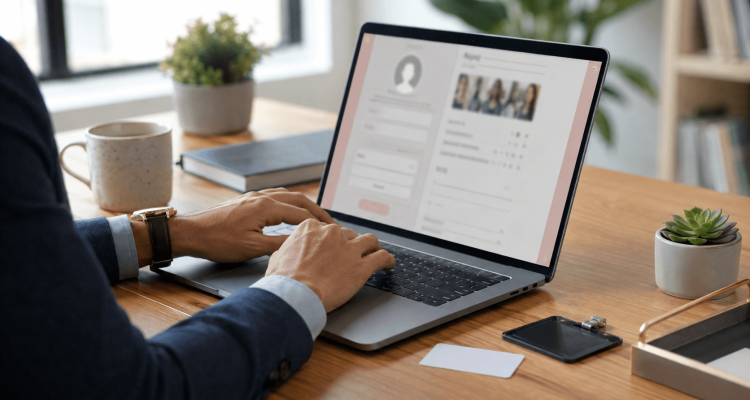
A strong sugar dating profile should communicate personality, expectations and lifestyle without functioning like a public résumé.
Use a First Name or Familiar Variation
Avoid placing your full legal name in the display-name field. A first name or familiar variation can provide authenticity without making the account instantly searchable.
Do not impersonate another person or create a fabricated identity. The goal is controlled disclosure, not deception.
Describe Your Profession Broadly
An exact title may be unnecessarily identifying, especially in specialized industries or smaller companies.
More privacy-conscious descriptions may include:
- Healthcare professional
- Technology executive
- Business owner
- Attorney in private practice
- Senior finance professional
- Creative-industry leader
- Real estate investor
- Management consultant
Your profile can communicate ambition and professional stability without publishing your company name, office address or exact leadership position.
Leave Employer Names Out of the Profile
A serious connection does not require immediate access to your employer’s identity.
Publishing a company name may expose:
- Your work email format
- Your office location
- Your professional biography
- Your employees or business partners
- Your public speaking appearances
- Your company’s contact information
- Your likely travel or meeting schedule
Employer disclosure can happen later, after trust has developed and there is a genuine reason to share it.
Avoid a Résumé-Style Biography
A list of degrees, professional memberships, awards and board positions may appear impressive, but it can also create a highly searchable personal fingerprint.
Choose one or two broad details that communicate your lifestyle and interests. Save the full professional biography for a later stage of the relationship.
Should You Use Your Real Job Title on a Sugar Dating Profile?
In most cases, not at the beginning.
The appropriate level of detail depends on how easily the title could identify you.
| Professional situation | Safer early description |
|---|---|
| One of many managers in a large company | General management role |
| Senior executive listed on a company website | Executive in the relevant industry |
| Physician with a public clinic profile | Healthcare professional or specialist |
| Partner at a small law firm | Attorney or legal professional |
| Publicly known founder | Business owner or technology founder |
| Government or security-sensitive role | Broad professional field only |
| Content creator or public personality | Media or creative professional |
No one should need to prove professional status by sending employment documents to a person they have only recently met online.
A LinkedIn profile, employee badge, tax return, corporate email address or business record may reveal far more information than intended. Any form of verification should be proportionate to the stage of the connection.
Separate Sugar Dating From Your Professional Identity
One of the most effective privacy measures is creating separation between your dating presence and your everyday professional accounts.
Use a Dedicated Email Address
Create an email account used only for dating-related communication.
The address should not include:
- Your full name
- Your birth year
- Your employer
- Your company domain
- Your professional title
- A username used on other platforms
Reusing the same username across dating, professional and social platforms can make those accounts easier to connect.
Use a Separate Communication Channel
Do not publish your main business number or a phone number closely linked to public professional profiles.
Keep early communication inside the sugar dating platform. When moving to another channel becomes appropriate, choose an option that does not immediately expose your workplace, home address, legal name or linked social-media accounts.
Create a Unique Password
Do not reuse a password from your work email, online banking, primary email account or professional tools.
The Cybersecurity and Infrastructure Security Agency recommends using strong, unique passwords and a trusted password manager. An additional authentication step can make it more difficult for someone to access an account even if the password becomes exposed.
Enable multifactor authentication for your dating email and any related account where the option is available.
Review Every Photo for Identifying Clues
A photograph may reveal significantly more than a person’s appearance.
Before uploading an image, examine the entire background and consider what an unfamiliar person could learn from it.
Check for Workplace Information
Avoid photographs showing:
- Employee badges
- Office logos
- Conference name tags
- Company awards
- Building directories
- Branded uniforms
- Computer screens
- Business documents
- Recognizable office views
Protect Your Home Location
A photograph taken at home may unintentionally reveal:
- A street number
- An apartment view
- A distinctive building
- A nearby landmark
- A vehicle license plate
- School information
- Mail or delivery labels
Use a neutral or non-identifying background whenever possible.
Avoid Posting Real-Time Travel Information
Professionals who travel frequently should avoid announcing exact hotels, flight plans or conference schedules to a new contact.
A safer description would be:
I travel to the West Coast regularly for work.
This communicates lifestyle without broadcasting a precise location or itinerary.
Avoid Reusing Public Corporate Photographs
Using the same headshot on a dating profile, company website and LinkedIn page can make those identities easier to connect.
Consider using recent and accurate photographs that are not identical to the images attached to your public professional profiles. Photos should remain honest and should not be altered so heavily that they misrepresent your appearance.
Limit Unnecessary Location Exposure
Location information can help people find compatible matches, but overly precise location sharing may expose personal routines.
Use a city or general metropolitan area rather than a residential neighborhood when the platform allows it.
For example:
- New York City rather than a specific Manhattan building
- Greater Los Angeles rather than a residential street
- Miami area rather than a condominium name
- Dallas–Fort Worth rather than a precise suburb
- Washington, D.C. area rather than a government office location
Avoid sharing live location data before trust has been established.
Review whether your photos, messaging applications or social platforms automatically attach location information. Device permissions should be limited to what the service genuinely requires.
Keep Early Conversations Inside the Platform
Moving immediately to private texting may feel convenient, but it can remove some of the structure available within a serious sugar dating platform.
Remaining in-platform during the early stage gives both people time to:
- Review profile consistency
- Identify pressure or manipulation
- Use reporting and blocking tools
- Avoid exposing private contact information
- Maintain a record of inappropriate behavior
- Evaluate whether the other person respects boundaries
A person who becomes angry because you will not immediately share your personal phone number is revealing useful information about how they respond to boundaries.
On a serious platform such as Sugarbook, features including profile verification, face verification, reporting tools and in-platform communication can provide additional trust signals. Readers can review how Sugarbook approaches verification, privacy and user protection before deciding what information to share. These tools should support personal judgment rather than replace it.
Verify Someone Without Oversharing
Verification should reduce uncertainty. It should not create a new privacy problem.
Use Platform Verification First
A verified profile may indicate that an account has completed additional authenticity checks. Understanding why face verification matters in safer sugar daddy dating can help professionals assess identity signals without immediately exposing private documents.
However, verification should be treated as one trust signal. It does not guarantee a person’s intentions, financial position, personality or future behavior.
Look for Consistency Over Time
Before sharing private information, compare:
- Profile details
- Communication style
- Stated profession
- General location
- Schedule
- Photographs
- Video-call appearance
- Relationship expectations
Minor differences may have innocent explanations. Repeated contradictions, evasiveness or pressure deserve greater caution.
Do Not Exchange Sensitive Documents
Neither person should need to send a new online contact:
- A Social Security card
- A passport copy
- A driver’s license image
- A tax return
- A payroll record
- A bank statement
- Corporate documents
- Account login details
- Authentication or security codes
Be especially cautious when someone directs you to an unfamiliar external website for identity verification, background checking or payment confirmation.
Use verification features accessed directly through the legitimate platform rather than links sent privately by another member. A more complete screening process is covered in this guide to verifying a sugar daddy safely without oversharing.
Do Not Treat Wealth Claims as Proof of Identity
A luxury vehicle, expensive watch, private-club photograph or first-class cabin does not prove someone’s identity or financial position.
Images may be borrowed, staged, manipulated or presented without context. Professional titles can also be copied from real people.
Evaluate conduct rather than status symbols.
Stronger trust indicators include:
- Consistent communication
- Respect for privacy
- Willingness to remain in-platform initially
- Completed verification
- Realistic expectations
- No requests for money or sensitive documents
- No pressure to act immediately
- Willingness to meet safely in public when appropriate
A genuinely successful person will usually understand why another professional wants to protect private information. Sugar daddies who are concerned about impersonation, financial pressure or account misuse can also review these sugar daddy privacy and scam-prevention considerations.
Financial Requests Are Not a Normal Verification Step
Do not send money to prove seriousness, unlock a payment, complete a background check or demonstrate loyalty.
Be cautious of requests involving:
- Gift cards
- Cryptocurrency
- Wire transfers
- Prepaid cards
- Account activation payments
- Check deposits followed by refund requests
- Processing fees
- Investment opportunities
- Banking credentials
The Federal Trade Commission advises consumers to be cautious when someone met through online dating asks for money, particularly through payment methods that are difficult to reverse.
Never allow a new contact to route business funds, investment proceeds or another person’s money through your accounts.
Be Careful When Connecting on Social Media
Connecting on social media may reveal an entire personal network at once.
A public or lightly protected account may disclose:
- Your legal surname
- Family members
- Children
- Your employer
- Your home neighborhood
- Upcoming events
- Favorite locations
- Vacation dates
- Friends and coworkers
Before connecting, review what an unfamiliar viewer can see.
Check old posts, tagged photographs, public comments, visible friend lists and location check-ins. It is reasonable to delay social-media access until the connection has demonstrated consistency and respect.
Create a Gradual Disclosure Plan

Privacy decisions become easier when they are made before meeting someone rather than during an emotionally charged conversation.
Stage One: Initial Profile
Consider sharing:
- A general profession
- A broad city or region
- Interests
- Communication preferences
- Relationship expectations
- Recent, non-identifying photographs
Keep private:
- Your surname
- Your employer
- Your exact job title
- Your home address
- Your private social-media accounts
- Direct financial information
Stage Two: Consistent In-Platform Conversation
You may decide to share:
- More specific interests
- General availability
- Additional platform-controlled photographs
- Broader career context
- Boundaries around communication and meetings
Continue withholding sensitive documents and exact location information.
Stage Three: Verification and a Safe Public Meeting
After reasonable consistency and verification, both adults may choose to exchange additional details needed to coordinate a public meeting.
Use your own transportation, meet in a populated location and tell a trusted person where you are going.
Stage Four: Established Trust
Personal information can be disclosed gradually as the connection becomes more established.
Trust should be based on repeated behavior, not urgency, flattery, impressive photographs or unsupported claims.
Set Privacy Boundaries Before Moving Off-Platform
Before exchanging personal contact information, discuss what each person expects.
Useful topics include:
- The preferred communication channel
- Acceptable calling hours
- Whether work numbers are off-limits
- Whether screenshots may be taken
- Whether photographs may be stored or shared
- Whether social-media connections are expected
- How private information should be handled
- What happens if either person decides not to continue
Clear privacy boundaries reduce ambiguity and create a more respectful communication environment.
Protect Photos, Messages and Personal Data
Assume that anything sent digitally could potentially be copied, stored or forwarded.
This does not mean avoiding every personal conversation. It means being selective about what is shared before trust exists.
Avoid sending images or information that could expose:
- Your workplace
- Your home
- Children or relatives
- Confidential business information
- Identification documents
- Financial accounts
- Private access codes
Official consumer-protection guidance recommends limiting the personal information shared with people first met online and remaining cautious when conversations quickly involve requests for money, private images or identifying documents.
Pressure, threats or attempts to obtain payment should not be handled privately. Stop communication, preserve relevant evidence and report the account through the platform.
Watch for Attempts to Create Urgency
Privacy failures often occur because someone is rushed into making a decision.
Common pressure tactics include:
- “Prove you trust me right now.”
- “Send your ID so I know you are real.”
- “Move to this private app immediately.”
- “My assistant needs your banking details.”
- “Complete this verification link.”
- “Do not tell anyone about this.”
- “I need your home address to send something.”
- “Invest now before the opportunity closes.”
A legitimate connection can tolerate reasonable caution.
When someone tries to prevent you from thinking, checking information independently or speaking to a trusted person, slow the conversation down.
What to Do When Profile Details Do Not Match
A mismatch does not automatically prove deception, but it should not be ignored.
Pause before sharing additional information when:
- The person looks significantly different during a video call
- Career details repeatedly change
- The stated location does not match the person’s schedule
- Profile photographs appear connected to another name
- The person avoids platform verification
- Public meetings are repeatedly canceled
- Documents are requested as proof of identity
- The person becomes hostile when questioned
Ask a simple, non-accusatory question and observe the response.
A trustworthy person may calmly clarify the discrepancy. Someone acting dishonestly may create more confusion, increase pressure or redirect the conversation toward money.
When the explanation remains inconsistent, end contact and use the platform’s reporting tools. Review the broader warning signs associated with fake dating profiles and inconsistent online identities before agreeing to meet or share more information.
What to Do If Your Identity Has Already Been Exposed
If you believe someone has connected your dating profile to your professional identity, respond methodically.
- Stop sharing additional information.
- Save relevant messages, usernames and dates.
- Block and report the account through the platform.
- Change exposed or reused passwords.
- Enable multifactor authentication.
- Review email-forwarding rules and recent account activity.
- Tighten social-media privacy settings.
- Alert your employer’s security team if work systems may be affected.
- Monitor financial accounts if payment or banking information was shared.
- Use official reporting and identity-recovery resources when fraud or identity theft is suspected.
In the United States, the Federal Trade Commission’s IdentityTheft.gov service provides recovery steps for people whose personal information may have been misused.
Do not pay someone who threatens to distribute private information. Payment does not guarantee that the material will be deleted or that further demands will stop.
Professional Privacy Checklist Before Publishing Your Profile
Before making a sugar dating profile visible, confirm that:
- Your full legal name is not displayed.
- Your employer is not named.
- Your exact title cannot easily identify you.
- Your username is not reused elsewhere.
- Your email is separate from work and primary accounts.
- Your password is unique.
- Multifactor authentication is enabled where available.
- Your photographs do not reveal your office or home.
- Your profile images are not identical to public corporate headshots.
- Your location settings are no more precise than necessary.
- Your social accounts do not expose family or workplace details.
- You understand the platform’s verification process.
- You know how to block and report another member.
- You have decided what information you will share at each stage.
Discretion Should Support Better Decisions
Successful professionals do not have to choose between authenticity and privacy.
The stronger approach is selective transparency: being honest about who you are while controlling access to information that an unfamiliar person does not yet need.
A respectful sugar dating connection should allow both adults to move at a reasonable pace. It should not require immediate access to a surname, employer, home address, financial account or private social network.
A serious sugar dating platform can provide verification, face verification, reporting tools, privacy controls and a more structured communication environment. Sugarbook supports these trust signals through its verification process, security features and in-platform communication tools. Professionals comparing their options should examine privacy controls, verification processes and reporting tools before joining a sugar daddy website.
However, platform features should work together with personal judgment, careful boundaries and gradual disclosure.
Privacy is not about assuming everyone is dishonest. It is about allowing trust to develop before access expands.
Key Takeaways
- Use broad and truthful career descriptions instead of publishing an exact employer and job title.
- Create a dedicated email address, unique password and separate communication channel for dating.
- Review photographs for office logos, badges, home details, license plates and recognizable locations.
- Keep early conversations inside the sugar dating platform and use legitimate verification features.
- Treat verification as a trust signal, not a guarantee of character, finances or future behavior.
- Never share identification documents, banking records, tax documents or authentication codes with a new online contact.
- Reveal personal information gradually as consistency, verification and respect are established.
- A person who respects you should also respect reasonable privacy boundaries.
FAQ
What is the best approach to staying discreet in sugar dating for professionals?
The safest approach is to reveal personal information in stages, starting with enough truthful information to create a credible profile while avoiding details that identify your full name, employer or home address, and using verification and in‑platform communication before moving to private channels.
Should you use your real job title on a sugar dating profile?
In most cases, not at the beginning; use a safer early description such as a general or broader professional context, and avoid publishing your exact title or employer until trust has developed.
How should you separate your professional identity from your sugar dating profile?
Create separation by using a dedicated email address, a separate communication channel, and unique passwords, while keeping early conversations inside the platform and avoiding linking to primary professional accounts.
What should you disclose at each stage of a gradual disclosure plan?
Stage One: share a general profession and non-identifying details; Stage Two: in-platform conversations with broader career context; Stage Three: verification and a safe public meeting; Stage Four: established trust with gradually disclosed personal information.
What are common privacy red flags and what should you do if your identity has been exposed?
Watch for mismatches, pressure to share sensitive documents, or requests for money; if exposure occurs, stop sharing information, block and report the account, change exposed passwords, enable multifactor authentication and notify relevant parties or security teams as needed.
Meet successful sugar daddies and confident sugar babies on a trusted sugar dating app for adults in the United States. Join free today.