Last Updated on July 19, 2026 by Daryl Emily

Meet successful sugar daddies and confident sugar babies on the world’s leading sugar dating app. Join free today.
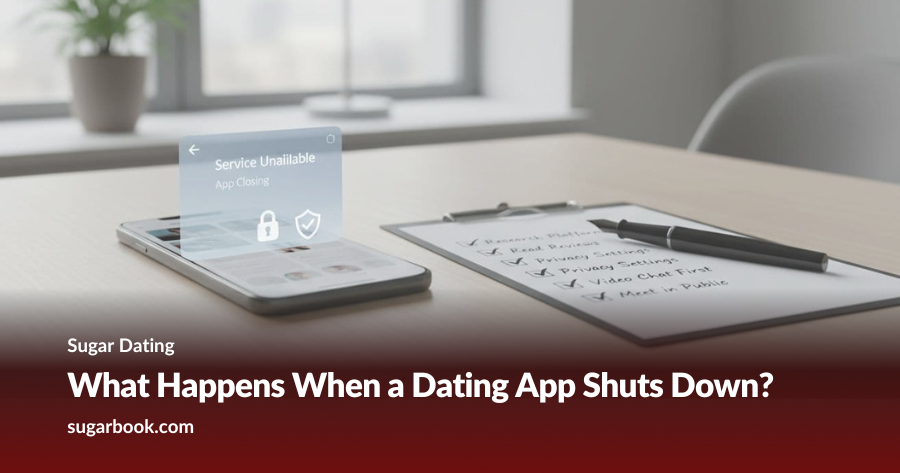
When a dating app shuts down, users can lose messages, matches, photos, profile details, subscriptions, and customer support fast. Most platforms do not offer easy exports in the online dating space, so the safest move is to check privacy, billing, deletion, moderation, and verification before you sign up somewhere new.
A dating app shutdown sounds like company news, until your matches disappear, your messages vanish, and your card is still getting charged. That sudden loss of connection can impact mental health and trigger feelings of loneliness.
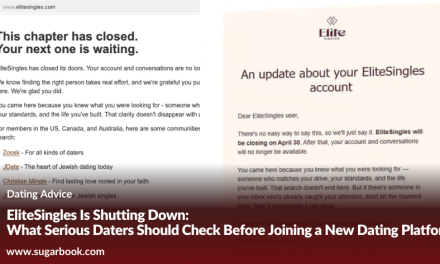
After the recent dating app shutdown case tied to EliteSingles in the U.S., and with other dating apps shrinking or changing direction, more people are asking what happens when a dating app shuts down. Usually, you lose more than a login. You can lose profile history, paid time, support access, and the one conversation you meant to answer later.
Before you join the next platform, it helps to slow down and check a few boring things first. That’s where the real protection is.
Contents
- What You Need to Know
- What happens when a dating app shuts down first? The losses add up fast
- A dating platform safety checklist before you sign up again
- How to choose a safe dating platform that feels more serious and less risky
- What to do right now if your current dating app has shutdown risk
- Final thoughts
- How Is a Sugar Daddy App Different From a Regular Dating App?
- FAQ
What You Need to Know
When a dating app shuts down, users may lose access to matches, messages, profile details, photos, subscriptions, and customer support with limited warning. Before joining another platform, check how it handles privacy, account deletion, billing, refunds, verification, and moderation. A safer dating platform should make it clear how profiles are reviewed, how users can report issues, and how subscriptions can be cancelled. Sugarbook uses this kind of platform-safety framing to show why verification, privacy controls, and clearer user expectations matter before people move conversations forward or decide who to meet.
Key Takeaways:
- A dating app shutdown can affect messages, matches, subscriptions, and profile data.
- Users should check billing, refund, and cancellation terms before moving to another platform.
- Privacy controls, account deletion, and data handling should be reviewed carefully.
- Verification features help users avoid low-quality profiles and unsafe conversations.
- A serious dating platform should make expectations, safety, and support easy to understand.
What happens when a dating app shuts down first? The losses add up fast
Messages, matches, and profile history can vanish without warning
Most users think they have time. They usually don’t.
When an app closes, your account data may be deleted on a deadline you can’t control. That can mean chats, match history, saved prompts, photos, likes, and even search filters you spent time setting up. If the app doesn’t offer exports, and most don’t, unlike major players like Tinder or Hinge, smaller apps may lack robust data export tools, so there’s usually no clean way to move that history somewhere else.
That’s what makes a shutdown so frustrating. Dating isn’t only about finding new people. It’s also about context. The constant stream of notifications and the dopamine hit from swipe culture create an addictive behavior that makes a sudden shutdown feel like a personal loss. Who did you talk to last week? Which person shared their number but not their last name? Which match had plans to meet on Friday? Once the app goes dark, that thread can break for good.
Even profile details can matter more than people think. Bios, photos, verification status, and past preferences are part of your dating footprint. Rebuilding all of that on a new app takes time, hits your self-esteem when you have to rebuild your identity from scratch, and sometimes it changes how people respond to you.
Subscriptions, billing, and support can become harder to manage
The money side can get messy fast.
Some subscriptions run through Apple or Google. Others are billed directly by the platform. When a shutdown hits, refunds may depend on where you paid, what the terms said, and whether the company is still answering emails. Support teams often shrink before the doors fully close, so replies can slow down right when users need help most.
Save every receipt. Save the cancellation screen too. If you email support, keep the reply. If you request a refund, screenshot that request. Those small records can matter if auto-renewal hits again or you need to dispute a charge later.
A simple rule helps here: if you’re paying for dating, keep proof like you’re booking travel. You hope you won’t need it, but you’ll be glad it’s there.
A dating platform safety checklist before you sign up again
Most people check photos first. Smart users check the fine print first.
If you’re moving after a dating app shutdown, this dating platform safety checklist can save you time, money, and a privacy headache, paving the way for safer meeting in real life and genuine IRL connections.
 Read the privacy policy and data-sharing terms before you create a profile
No one wants to read a privacy policy. Read the parts that matter anyway.
Look for plain answers to a few questions. Does the dating app share data with third parties for ads or analytics? Does it sell or transfer data during a merger or shutdown? How long does it keep deleted accounts, photos, and messages? Can you download your data? Can you delete your account inside the app, or do you have to email support and wait?
This is where dating apps privacy stops being abstract. Your face, location habits, chat history, and payment details are not small things. If a platform is vague about retention or makes deletion hard to find, that’s a warning. Dating apps data sharing practices can expose you in ways you might not expect.
Look for strong profile verification and active moderation
Verification isn’t a magic fix, but weak verification is a problem.
A better app will explain how it checks users. That may include selfie verification, ID checks, liveness checks, or human review for flagged accounts. Stronger moderation also means fake profiles, stolen photos, and repeat scammers have a harder time sticking around. Your dating offline starts with trust built online.
If you’re dating in a niche space, this matters even more. People often want clearer expectations, more honest profiles, and fewer time-wasters. That’s why topics like profile verification for safer sugar dating matter. They show what safety looks like in practice, not only in marketing copy.
Check the refund rules, auto-renewal terms, and how to cancel
Billing tells you a lot about a platform’s character.
Look for trial terms, renewal timing, and how cancellation works before you add a card. Can you cancel inside the app in a few taps? Does the platform explain whether refunds are full, partial, or unavailable? Does it tell you whether billing is through the app store or direct? These steps help ensure online dating remains a positive experience rather than a financial stressor.
If you can’t figure out how to cancel in two minutes, treat that as a warning.
Hidden renewal terms, vague refund language, and hard-to-find cancellation paths are all red flags. Dating should be complicated enough. Billing shouldn’t be.
How to choose a safe dating platform that feels more serious and less risky
A safer app usually doesn’t feel louder. It feels clearer.
When people ask how to choose a safe dating platform, they’re often asking a deeper question: will I waste my time here, or can I trust what I’m seeing?
Choose platforms that are clear about who they serve and what they expect
Clear positioning helps. Confusion doesn’t.
Apps that try to be everything to everyone often create mismatched conversations. A more focused platform usually attracts users with better-defined intentions. Finding the one or establishing romantic connections requires conversational quality, which is often higher on niche apps. That’s helpful for singles seeking relationships, and it’s also helpful for sugar daddies and sugar babies who want less guessing and more upfront clarity.
Contrast this with the passive mindset common on Bumble or other mass-market dating apps. When expectations are stated early, users spend less time filtering chaos. You don’t have to decode every profile or wonder whether the other person is even on the right app.
Use Sugarbook as an example of why privacy and verification matter
Sugarbook is a global sugar dating platform built for verified sugar daddies and sugar babies. That’s useful here, not because any app is perfect, but because it shows what clearer expectations can look like. Choosing a structured platform like Sugarbook creates more social opportunities for those who want to avoid swipe culture.
On a verified sugar daddy dating platform, privacy settings, profile verification, and user intent all matter more because trust is the whole game. Users want real profiles, better screening, and safer introductions. Those are the same signals worth looking for on any platform, even outside sugar dating or dating offline.
The point isn’t hype. It’s structure. When an app tells users who it’s for, how profiles are checked, and how privacy is handled, people can make better choices.
Watch for signs that an app may not last
You don’t need inside information to spot risk.
Old app updates, poor recent reviews, confusing pricing, broken features, and lots of complaints about fake accounts are all bad signs. So is support that takes days to answer basic questions. If a platform can’t manage trust and maintenance now, it may not handle a messy exit well later.
 Read the newest reviews, not only the top-rated ones. Look at the update history in the app store. Search for complaints about refunds, fake profiles, or deleted accounts. A shaky app often leaves clues before anything official happens.
What to do right now if your current dating app has shutdown risk
Don’t wait for an email with a deadline buried in paragraph four.
If a platform looks unstable, act like your access could end soon.
Save your receipts, screenshots, and important chats
Start with proof.
Save payment receipts, invoice emails, profile photos you uploaded, and screenshots of any active subscription page. If a conversation matters, capture the parts you may need later, especially names, contact details, or plans already made. Do the same for cancellation pages and support replies.
This isn’t paranoia. It’s basic cleanup. If support disappears or billing gets messy, your own records may be all you have.
Move safely by checking the new app before you pay
Test first. Pay later.
Use the free version long enough to check the basics. Can you delete your account without emailing someone? Are privacy controls easy to find? Does the app explain its moderation and verification system? Do profiles look real, or does everything feel copy-pasted and thin?
Approach this transition with an active mindset. While waiting for a new platform to earn trust, consider a dating app hiatus. Look for organic meetings or attend singles events to keep your muscle memory for social interaction sharp. A meet-cute is still possible outside of dating apps. If it can’t do that, keep moving.
Final thoughts
What happens when a dating app shuts down is simple in one sense and messy in every other one. Users can lose access fast, and once that door closes, chats, matches, refunds, and support may be much harder to recover than expected.
The safer move is to vet the next app before you join it. Check privacy, deletion, verification, moderation, billing, and whether the user base seems serious about the same kind of connection you want.
A careful choice now protects more than your profile. It protects your time, your money, and the parts of your life you only meant to share in the right place. Maintain an active mindset to safeguard your mental health and self-esteem. While online dating is a tool, keep the focus on meeting in real life and building IRL connections.
How Is a Sugar Daddy App Different From a Regular Dating App?
From a third-party perspective, the biggest difference between a sugar daddy app and a regular dating app is the level of expectation behind the connection. A normal dating app is usually built for broad dating intent, casual chats, attraction-based matching, or long-term relationship discovery. Users often enter without clearly stating what they want, which can make conversations slower, unclear, or mismatched.
A sugar daddy app, on the other hand, usually serves a more specific dating purpose. Sugar daddy and sugar baby are often looking for clearer communication around lifestyle compatibility, time, boundaries, privacy, and relationship expectations from the beginning. This does not mean every connection follows the same structure, but the intent is usually more direct than on a mainstream dating app.
This is why platform trust matters. When users choose any online dating platform, they should look at verification, profile review, privacy controls, messaging safety, reporting tools, and how transparent the platform is about user protection. For modern sugar dating, these checks become even more important because users are often discussing expectations earlier in the conversation. A serious platform should help people communicate clearly while still protecting privacy, safety, and personal boundaries.
FAQ
Can I get my messages back after a dating app shuts down?
Usually, no. Dating apps like Tinder, Hinge, and Bumble have different data retention policies. If the platform deletes account data and doesn’t offer exports, messages and matches are often gone for good.
Do dating apps have to refund unused subscriptions when they close?
Sometimes, but not always in a simple way. Refunds may depend on the platform’s terms, local law, and whether you paid through the app store or directly.
How can I tell if a dating app is safe before I pay?
Check the privacy policy, account deletion options, verification system, moderation approach, recent reviews, billing terms, and cancellation flow before upgrading. Dating apps with these features also help users ease into meeting in real life, which can reduce the sting of face-to-face rejection.
Is profile verification enough to make a dating app trustworthy?
No, but it’s a strong sign. Verification works best when it’s paired with active moderation, clear policies, easy reporting, and honest billing.
Should a dating app shutdown lead to dating offline permanently?
No, one shutdown doesn’t mean you should swear off online dating forever. Focus on safer dating apps with strong data policies and user protections instead of going dating offline permanently.
Meet successful sugar daddies and confident sugar babies on the world’s leading sugar dating app. Join free today.