Last Updated on June 21, 2026 by Daryl Emily

Meet successful sugar daddies and confident sugar babies on the world’s leading sugar dating app. Join free today.
If you’re a sugar baby and a sugar dating conversation makes you uneasy, that feeling matters. You don’t need a dramatic threat to slow down, step back, or end the chat.
Unsafe conversations often start small. The sugar daddy may push for secrecy, rush you off the sugar dating app, promise money too fast, ask for fees, or turn sexual before you’ve built trust. The right move is simple, protect yourself first, then deal with the chat second.
Contents
Key Takeaways
- Trust your instincts: If a sugar dating conversation feels uneasy, stop replying immediately—no need for a clear threat.
- Spot red flags early: Watch for pressure to move off-app, urgent promises of money, requests for personal details, fees, or explicit photos.
- Act fast to protect yourself: Screenshot everything, block and report the profile, and seek offline help for any threats.
- Secure your info afterward: Change passwords, monitor for follow-ups, and never pay scammers or blackmailers.
- Build safer habits: Stay on-platform early, demand video verification, and set firm boundaries from the start.
Notice the red flags before the conversation gets worse
Most unsafe situations don’t begin with an obvious threat. They start with behavior that feels off, then get more intense once the other person sees you still replying.
In sugar dating on a dating site, current scam patterns often include fake wealth, promises of financial help, fake payment screenshots, “verification” stories, and pressure to move to private apps early. In 2026, some scammers also use AI-made profile photos, cloned voices, or deepfake video. That means a polished profile is no longer proof of anything by itself. Sugar babies should be wary of these tricks from fake sugar daddies, often posing as older men.
Feeling uneasy is enough reason to stop. You do not owe anyone more time while you “figure it out.”
 ### Pay attention to pressure, urgency, and talk that feels too fast
Pressure is one of the clearest warning signs. A potential sugar daddy who talks about monthly allowances, expensive gifts, or instant commitment in the first few messages of the first conversation is often trying to lower your guard.
The same goes for love bombing. If they act intensely attached before they know you, slow down. Urgency is often the point. They want you to react, not think.
Watch for pressure to meet right away, talk of sexual expectations in the first message, or repeated requests to move to text, Telegram, WhatsApp, or another private channel. A safe sugar daddy respects pacing. An unsafe one treats your boundaries like an obstacle.
Treat requests for personal details, money, or explicit photos as a serious warning
Requests for bank details, your home address, workplace, ID photos, passwords, or account logins should stop the conversation. So should demands for gift cards, “release fees,” background-check costs, or verification payments.
Explicit photos are another major risk. Once shared, those images can be used for blackmail. A real sugar daddy does not need nude photos, financial details, or personal documents to prove interest, even in the first conversation.
Refusing a request should not start an argument. If the person gets angry, guilt-trips you, or says you are “wasting their time,” that tells you plenty.
Take these steps right away if a sugar dating conversation feels unsafe
Once a chat in a sugar relationship crosses the line, act fast and keep it simple. Your goal is to protect your safety as a sugar baby, preserve proof, and cut off access.
Stop replying, save screenshots, and keep the evidence
Do not argue with the sugar daddy. Do not explain your decision. Also, do not try to “test” them for one more message. That often gives them more chances to manipulate, threaten, or delete evidence.
Save screenshots of the full conversation, including the profile name, username, profile photos, dates, and any payment claims or threats. If the app shows a profile link or ID number, save that too. If you moved off the platform, keep texts, voicemails, call logs, email headers, and usernames from every app they used.
Block and report the profile on the app before moving on
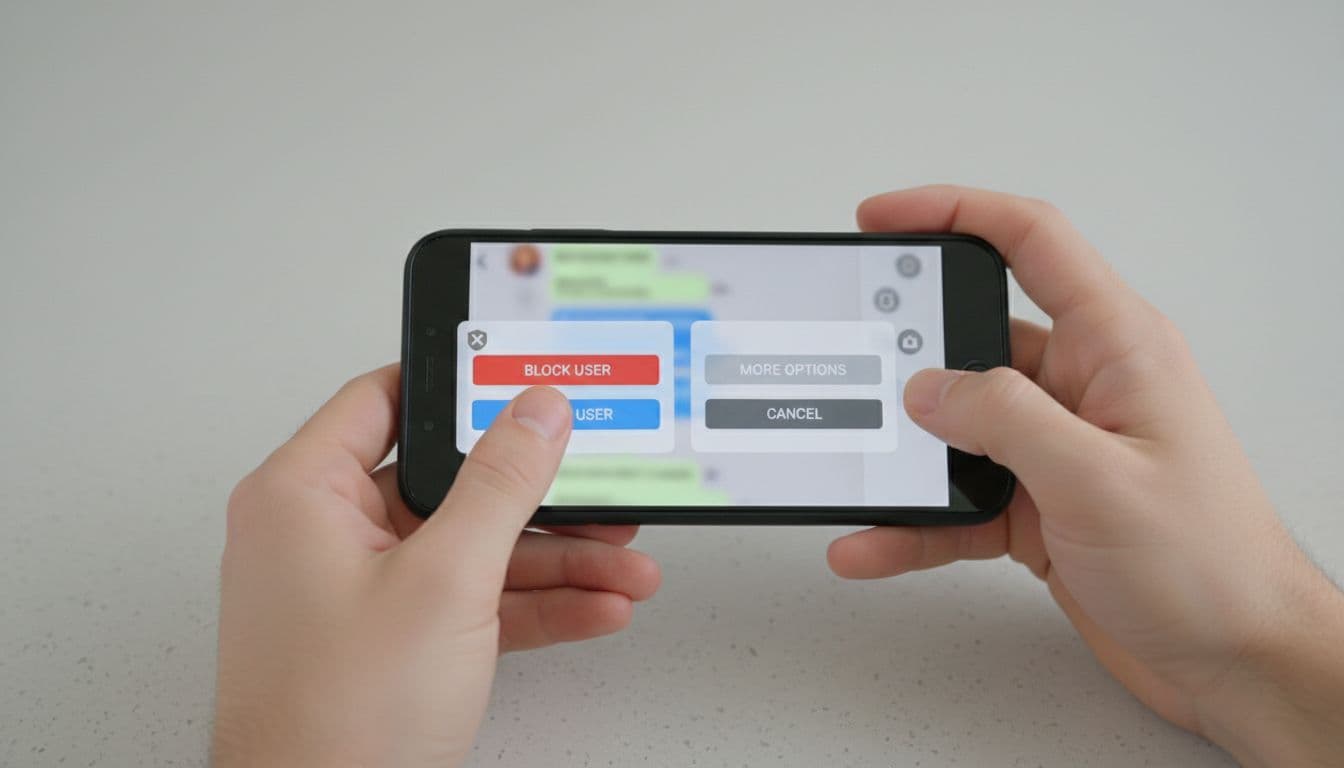
Most sugar dating apps, including Seeking Arrangements, let you block and report the sugar daddy’s profile from the chat window or profile menu. Use that tool before deleting anything. Pick the reason that fits best, such as scam, harassment, impersonation, blackmail, or threats. If the platform allows attachments, add screenshots.
 If you use a platform with verification tools, use them early next time, not after a problem starts. Reputable communities, including Sugarbook, often offer reporting and profile review systems, but you still need to act when behavior turns unsafe.
If there is a threat, get offline help right away
Threats change the situation. If the person says they will expose you, share photos, find you, show up, or contact your job or family, treat it as urgent.
Tell someone you trust right away. If a meet-up was planned, contact venue staff, campus safety, building security, or local law enforcement. If the issue involves sexual coercion, assault, or abuse, contact RAINN at 1-800-656-4673. Blackmail, stalking, and coercion are not normal dating problems. They are safety issues.
Protect yourself after the chat ends
Ending the conversation is step one. After that, focus on damage control. A short review now can prevent a much larger problem later.
Change passwords and tighten privacy if you shared any personal details
If you gave out your phone number, email, social handle, workplace, photos, or location clues, lock things down. Change your passwords, turn on two-factor authentication, and review your privacy settings on every social platform.
If you shared banking details, contact your bank or card issuer fast. Protecting these personal assets is crucial for maintaining your financial independence, a key goal in sugar dating. If you sent ID photos, watch for signs of identity misuse. Also remove public posts that reveal where you live, work, or spend time.
Watch for follow-up scams, blackmail, or contact from new accounts
Scammers often come back through a new number, a different app, or a fresh profile, sometimes posing as a sugar daddy to lure you back in. They may fake an emergency, pretend to be a friend, or demand money to keep photos private, all to extract further monetary benefits.
Do not pay. Payment often leads to more demands, not closure. Instead, keep documenting every contact attempt. Save the new usernames, numbers, and messages, then block and report again.
Build safer habits for future sugar dating conversations
A bad chat does not mean you did anything wrong. Given the inherent power imbalance in sugar dating, it does mean your screening process may need stronger guardrails to minimize emotional labor.
Keep early chats on the platform and ask for a video call before trust grows
Stay on-platform in the early stage. It gives you reporting tools, time stamps, and a cleaner record if something goes wrong.
A video call can help verify consistency, especially when paired with slow pacing and details over time for potential pay per meet or platonic arrangements. Still, keep your standards realistic. In 2026, AI-made faces and deepfake calls can look convincing. Verified badges help, but they are not a full guarantee of safety.
 ### Set clear boundaries early so unsafe behavior stands out faster
Clear rules make bad behavior easier to spot. Decide early that you won’t send money, share private photos, hand over personal documents, or meet in a private place for your first date. Be wary of promises like designer bags that try to rush past your boundaries.
Keep the same rule for consent and pace, whether discussing companionship or other terms. If someone ignores a “no,” pushes after you decline, or treats your boundary like a debate, end the chat. The right person won’t need to be managed.
A safe sugar dating conversation should feel like a networking opportunity built on honesty, not a cold business transaction; it should be clear, calm, and respectful. If it feels slippery, rushed, or intimidating, that is enough reason to leave. You do not owe anyone more messages, more proof, or a second chance after a boundary has been crossed.
Trust your instincts, use block and report tools, and get support when a sugar dating conversation turns into harassment or threats from a sugar daddy or sugar baby. Whether you are a sugar baby chatting with a sugar daddy or vice versa, your safety matters more than staying polite. Aim for those mutually beneficial arrangements that prioritize respect.
Frequently Asked Questions
What are the most common red flags in unsafe sugar dating conversations?
Red flags include pressure to move to private apps quickly, promises of money or gifts too soon, requests for fees, personal details, or explicit photos, and urgency to meet or commit. Unsafe chats often start subtle but intensify if you keep replying. A safe sugar daddy respects your pace and boundaries.
What should I do right away if a conversation feels off?
Stop replying, save full screenshots including profiles and timestamps, then block and report on the app. Do not argue, explain, or test them further—it gives scammers more chances to manipulate. Your safety comes first.
Is it okay to share photos or personal info early?
No—never share explicit photos, bank details, IDs, addresses, or passwords, even to “prove” interest. These can lead to blackmail or scams. Refuse firmly; anger or guilt-tripping confirms the danger.
What if the sugar daddy makes threats?
Treat threats of exposure, stalking, or harm as urgent. Tell a trusted person, contact the authorities, and document everything. Cancel any planned meetings and alert security if needed. Do not engage or pay.
How can I make future sugar dating safer?
Keep early chats on the platform, request video calls for verification, and state clear boundaries upfront like no fees or private meets first. Ignore rushed promises and end chats that feel slippery or pushy. Prioritize respect over politeness.
Meet successful sugar daddies and confident sugar babies on the world’s leading sugar dating app. Join free today.