Last Updated on September 9, 2026 by Sugarbook Team

Meet successful sugar daddies and confident sugar babies on the world’s leading sugar dating app. Join free today.
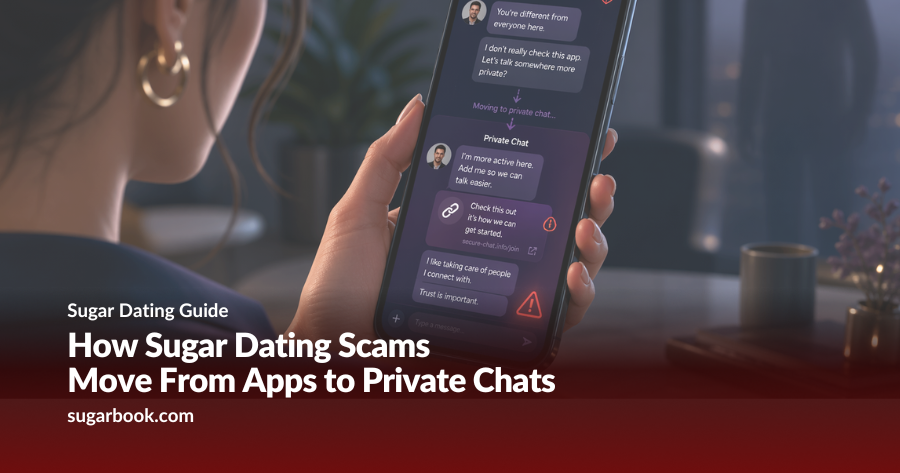
In a sugar dating scam, scammers rarely show their full plan on a dating app. They charm fast, then push you onto WhatsApp, Telegram, or Signal because private chat gives them more control and less platform oversight.
That move matters. Once the chat leaves the app, reports get harder, evidence can disappear, and your phone number may expose more personal data. In 2026, some scams also use stolen photos, AI-made images, fake voice notes, and deepfake video. The pattern is still simple: hook you on the app, isolate you in private chat, then ask for money, access, or explicit content.
The steps can look harmless at first, so it helps to know how the script usually unfolds.
Contents
- Key Takeaways
- How the scam usually starts on dating apps
- Why scammers push the conversation into private chats
- What happens in private chat, from fake bonding to money requests
- The biggest red flags to watch for before you get pulled in
- Frequently Asked Questions
- How to protect yourself if a sugar dating chat starts feeling off
Key Takeaways
- Scammers use polished fake profiles with luxury photos and rapid love bombing on dating apps to hook you fast, then push to private chats like WhatsApp or Telegram for less oversight and more control.
- Once off-platform, they build a fake bond before requesting money via fees, crypto, or bank details, or turn to sextortion with explicit content demands.
- Key red flags include early moves off-app, avoiding live video calls, inconsistent stories, and irreversible payment requests like gift cards or wire transfers.
- Protect yourself by staying on the app, running reverse image searches, refusing any financial or personal info asks, and reporting suspicious accounts immediately.
How the scam usually starts on dating apps
Most sugar dating scams begin with a strong first impression. On Tinder, mainstream dating apps, sugar dating platforms, and social media like Instagram, the fake profile looks polished, warm, and unusually generous. The person may reply within minutes, praise your looks, and talk about travel, bills, gifts, or a monthly allowance before you’ve built real trust.
That speed is the point. A scammer wants emotional buy-in before you slow down and check details. The fake profile is less about dating and more about getting you attached to an image.
Fake profiles are built to look rich, generous, and hard to resist
A fake sugar daddy or sugar baby profile often looks almost too clean. Photos show luxury cars, hotel suites, designer clothes, beach trips, or office towers. The bio hints at wealth but stays vague about work. You may see lines about “spoiling the right person” or offering easy support with few questions asked.
 Some of those images are stolen from social media like Instagram. Others look stock-like because they are. In 2026, a growing share may be AI-made, polished enough to pass a quick glance. That’s why a perfect photo set means less than it used to.
Love bombing and quick trust are part of the setup
After matching, the tone often turns intense right away. The scammer sends constant compliments, pet names, and big claims about how different you are from everyone else. They may say they feel “safe” with you after a few hours.
That kind of fast closeness can feel flattering, especially if the person seems wealthy and attentive. Still, real trust usually grows with time, not a rush of praise. When someone pushes instant intimacy, they are often trying to lower your guard before the next step.
Why scammers push the conversation into private chats
The move off-platform is the turning point. Dating apps have reporting tools, moderation teams, chat logs, and account checks. Private apps like WhatsApp, Telegram, Signal, Snapchat, and Direct Message platforms give scammers more space to work without that friction.
They also gain more control over timing and tone. A phone number can reveal your personal information on other apps, link to social accounts, or open the door to repeated contact from new numbers. If the platform never sees the money ask, the account may stay active longer.
Moving the chat off-platform is often the moment the scam gets harder to stop.
The excuses they use to get you onto WhatsApp, Telegram, or Signal
The script is usually smooth. They say the dating app is too public, the notifications are bad, or their account gets flagged. Some claim they want “privacy” because of work or suggest Instagram for better discretion. Others say they want to send better photos, voice notes, or a quick video, often pushing for Snapchat or Direct Message too.
 On the surface, those excuses sound normal. In practice, early pressure to leave the app is one of the clearest sugar dating scam signs. A sincere match can keep talking where you met.
What changes once the chat leaves the app
The tone often shifts fast. Messages become more personal, more frequent, and more demanding. The scammer may ask where you live, what bank you use, or whether you live alone. They may also start testing boundaries with late-night messages or requests for private photos.
Private apps can help them hide. Disappearing messages remove records. Usernames can be changed. Telegram and similar tools can make tracing the account harder, especially when the person cycles through multiple profiles. At that stage, the scammer has more room to control the pace and less risk of a fast report.
What happens in private chat, from fake bonding to money requests
Once you’re in a private chat, the scam rarely turns aggressive right away. It usually grows through daily contact. Good morning texts, check-ins, selfies, voice notes, and small details create the feeling of a real connection through emotional manipulation. Posing as a Sugar Daddy, Sugar Momma, or generous partner for a Sugar Baby, the scammer may share a sad story about divorce, stress, family conflict, or travel delays. The goal is simple: make you feel chosen, trusted, and slightly responsible for them.
Latest full U.S. figures show 59,000 Americans lost $697 million to romance scams in 2024. Since then, broader 2025 and 2026 scam reports have pointed to more AI-assisted images, fake voices, and cryptocurrency angles. Sugar dating scams fit that same pattern, with one extra twist: the promise of financial support makes the setup feel believable.
They build a fake relationship before asking for anything
At first, the scammer may avoid direct asks. Instead, they build habit. You start hearing from them every day. They say they miss you, call you “baby,” and talk about future trips or an agreed arrangement for long-term support. If you suggest meeting, they are always traveling, busy, or dealing with a sudden problem.
A video call is where many scammers slip. Some refuse it. Others blame bad Wi-Fi, a broken camera, or a work rule. In 2026, a few may send short deepfake clips or fake voice notes to seem real. That still doesn’t equal a clear, live, two-way conversation.
The ask can look like help, an allowance test, or a crypto opportunity
The first request often sounds small. A fake Sugar Daddy may say he wants to send your allowance but needs you to pay a “processing fee” first. Or he sends a screenshot of a transfer that never arrives, then asks for your bank account login, debit card details, or a code sent to your phone. They might claim issues with stolen credit cards to push for your details.
Some scams drift into money laundering. You may be asked to receive funds and forward part of them elsewhere. Others move into fake investing. The person talks about easy cryptocurrency gains, asks you to join a platform, and coaches you through a first deposit. This overlaps with pig butchering, a romance-based investment scam that wider 2026 warnings keep flagging because the losses can be severe.
Some scams turn into sextortion instead of a money grab
Private chat also creates room for sexual pressure. The scammer asks for explicit photos or a quick video, often after heavy flattery and emotional manipulation. Once they get that content, the mood changes. They threaten to send it to your friends, employer, or family unless you pay or send more.
If that happens, stop replying. Don’t negotiate. Save evidence, block the account, and report it.
The biggest red flags to watch for before you get pulled in
Sugar dating scams are easier to spot when you focus on behavior, not charm. A polished profile can be fake. A clear pattern is harder to fake for long.
 This quick table highlights key red flags to separate a normal early chat from a risky one:
| Behavior | What it often means |
|---|---|
| Wants to leave the app in the first few messages | They want less oversight |
| Promises money before trust is built | They are baiting you |
| Avoids clear live video or meeting | The identity may be fake |
| Pushes Cash App, PayPal, gift cards, Google Play cards, fake checks, crypto, or wire transfers | They want hard-to-recover payments |
| Claims you need to pay a verification fee, clearance fee, or for a pending transaction | Excuse to get you to send money first |
| Asks for codes, banking details, or explicit content | They are setting up theft or coercion |
The takeaway is simple. Watch what they do, not what they promise.
They rush the timeline, avoid meeting, and keep changing the story
Scammers hate slow verification. They want feelings to move faster than facts. Plans to meet get canceled. Travel stories change. Emergencies appear whenever you ask for proof. Small details, such as job title, city, or schedule, stop lining up.
A real match may be busy. A scammer is often inconsistent. If the story keeps shifting, trust the pattern.
They ask for private info, money, or irreversible payments
This is where the risk becomes concrete. Requests for your phone number may come early so they can move you off-platform. After that, they may ask for bank details, login codes, gift cards, wire transfers, or crypto.
Those asks are not normal early dating behavior. Neither is pressure to send nudes, ID photos, or screenshots of your balance. Once money or sensitive data enters the chat, step back fast.
Frequently Asked Questions
Why do scammers insist on moving from dating apps to private chats like WhatsApp or Telegram?
Private chats give scammers more control, easier evasion of platform moderation, and tools like disappearing messages to hide evidence. Your phone number also exposes more personal data and enables persistent contact. Staying on the app keeps reporting simple and logs intact.
What are the most common excuses scammers use to get you off the dating app?
They claim the app is too public, notifications are poor, or their account risks flagging, often suggesting privacy for work or better photo/video sharing. These sound normal but signal a rush to isolate you from oversight. A real match respects your pace and stays where you met.
How do sugar dating scammers typically ask for money without raising alarms?
Requests start small, like a ‘processing fee’ for an allowance, fake transfer screenshots needing your bank details, or crypto investment opportunities. They may pose it as a test of trust or help with a sudden issue. All lead to irreversible payments like gift cards, wires, or digital assets that are hard to recover.
What should you do if a scammer has explicit photos or videos from you?
Stop replying, don’t negotiate or pay, save all evidence including screenshots, then block and report to the platform and authorities.
How can you verify if a sugar dating profile is legitimate before it gets serious?
Run reverse image searches on photos, especially luxury ones, and insist on a clear live video call early. Check for inconsistencies in stories, job details, or plans. Verified platforms with profile checks offer better safety than unmoderated apps or private chats.
How to protect yourself if a sugar dating chat starts feeling off
The safest move is often the least dramatic one: stay on the app until trust is earned. Verified platforms and mature communities, including Sugarbook and other services with profile checks and reporting tools, give you more protection than a private messenger ever will.
A few habits lower risk right away:
- Keep the conversation on-platform until you’ve had a clear live video call and checked for consistency.
- Run a reverse image search on profile photos, especially luxury shots that look staged or overly polished.
- Refuse any request for fees, gift cards, crypto, bank details, login codes, or personal information, which opens the door to phishing and identity theft.
- Don’t send explicit content to someone you haven’t verified in real time.
- Save screenshots, then block and report suspicious accounts before the story gets more complicated.
If you already sent money, contact your bank or payment provider at once. If explicit content is involved, save evidence and report the account to the platform and local authorities. Speed matters because 2026 romance scams are harder to spot, and AI tools make fake identities more convincing than ever.
The move from app to private chat often looks romantic on the surface, but it is usually strategic. Scammers want less oversight, more access, and a better chance to pressure you without witnesses.
Trust patterns over promises. If a purported sugar daddy or sugar baby pushes fast intimacy, secrecy, and money talk, leave the conversation before the private chat becomes the trap.
Meet successful sugar daddies and confident sugar babies on the world’s leading sugar dating app. Join free today.